
A faded, chalky Sprinter is rarely a lost cause. This overland van came in oxidized from years outside and left with corrected paint sealed under a ceramic coating.
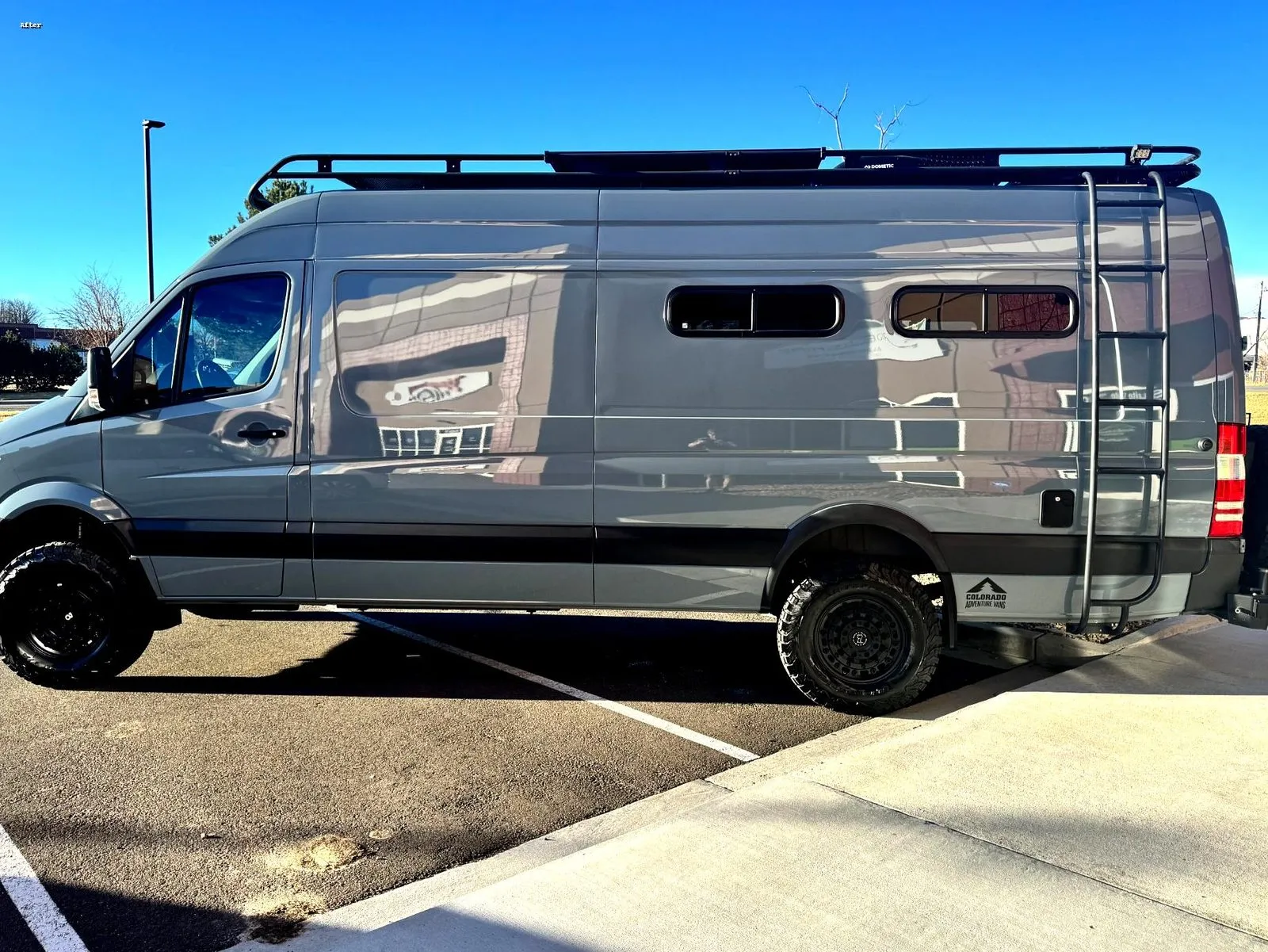
The van that came in
This Sprinter is an overland build, and it works for a living. It gets driven to trailheads, camped out of, and parked outside 24/7, because a van this tall does not fit in most garages. Colorado weather reaches it year-round: sun in the summer, snow and road grime in the winter, with no roof over it in between.
The paint showed all of it. The finish was oxidized and faded, dull where it should have had depth, with swirl marks and water spots layered on top. None of that is unusual for a Sprinter. The panels are huge and mostly flat, the roof and hood face the sky all day, and vans that live outdoors weather faster than cars that sleep in a garage.
Getting the surface clean
Every coating job starts with a thorough wash and decontamination, and on a vehicle this size that is a real job. A ceramic coating bonds to the clear coat, so anything left on the surface, embedded fallout, road film, old wax, gets locked underneath it. We cleaned the van down to bare, uncontaminated paint before any machine touched it. There is a lot of Sprinter to cover, and this step takes as long as it takes.
Correcting the paint before coating it
Washing gets the surface clean, but it does not fix oxidation. That took multi-step paint correction: machine polishing each panel to cut back the dead, oxidized layer and remove the swirl marks underneath. Big flat panels show every defect in direct light, so there is no hiding a rushed pass on a van. This is the slow part of the job, and it is the part that decides how the final result looks.
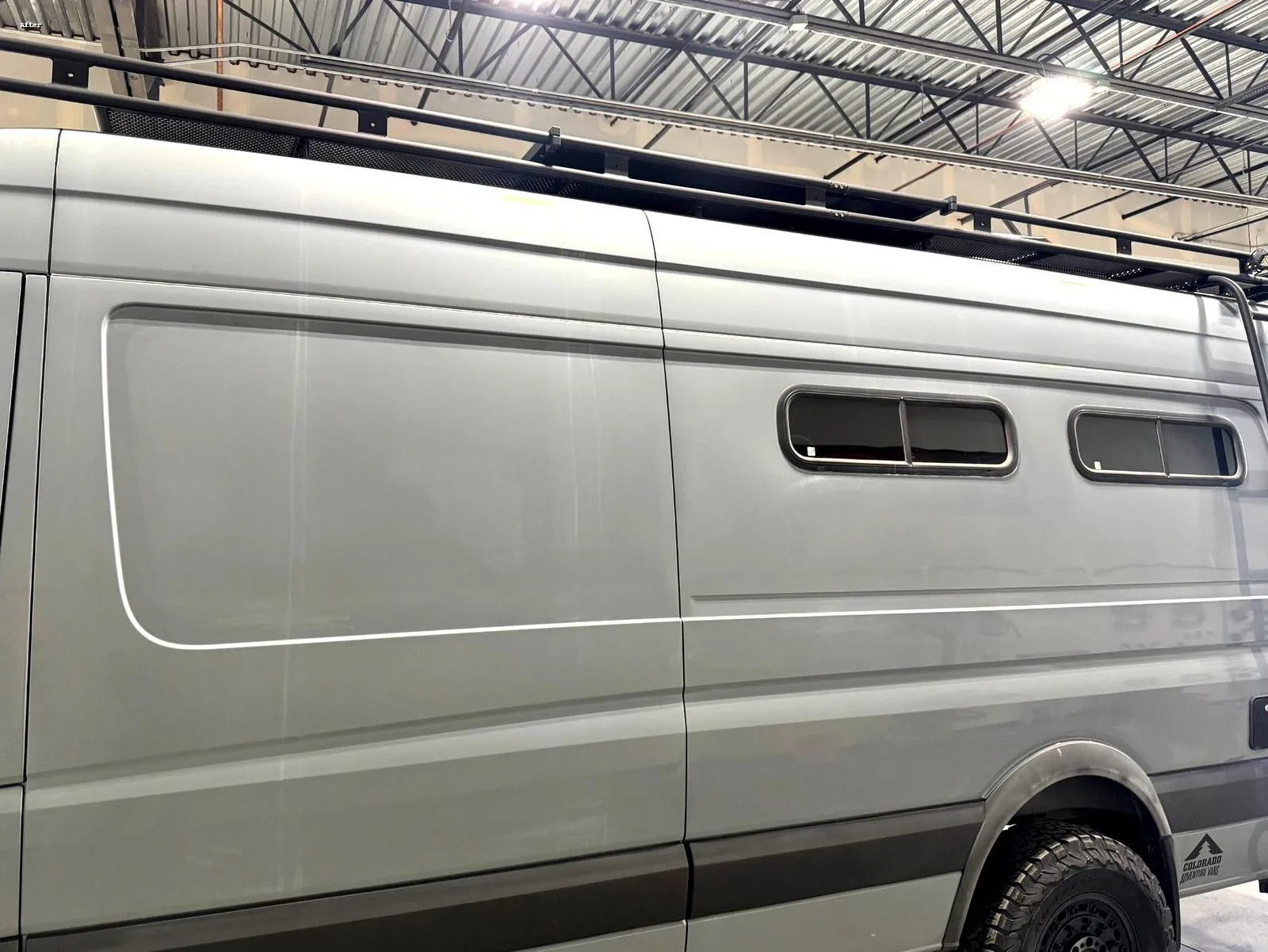
We correct before we coat because the order matters. A coating preserves whatever is under it. Coat oxidized paint and you have sealed in oxidized paint.
Sealing the finish
With the correction done, we applied a high-grade ceramic coating, hand-leveled one panel at a time and left to cure into a hard, bonded layer over the restored finish. On a van with this much sheet metal, that is a lot of panels, and each one gets the same attention as the hood of a sports car.
What the owner drives away with
The gloss is the obvious part. The practical part matters more on a van that lives outdoors. The coating is hydrophobic, so dust and road film rinse off instead of needing a scrub, and washing a vehicle this large gets much faster. Its UV protection stops the fade from starting over. It also resists dirt, bird droppings, and road salt between washes.
The van went back to doing what it was built for. It will keep sitting outside between trips, and now the paint can take it.