
Paint protection film takes the rock chips a ceramic coating cannot, and the coating keeps every panel glossy and easy to wash, so stacking the two covers what each one misses.
The Charger and the plan
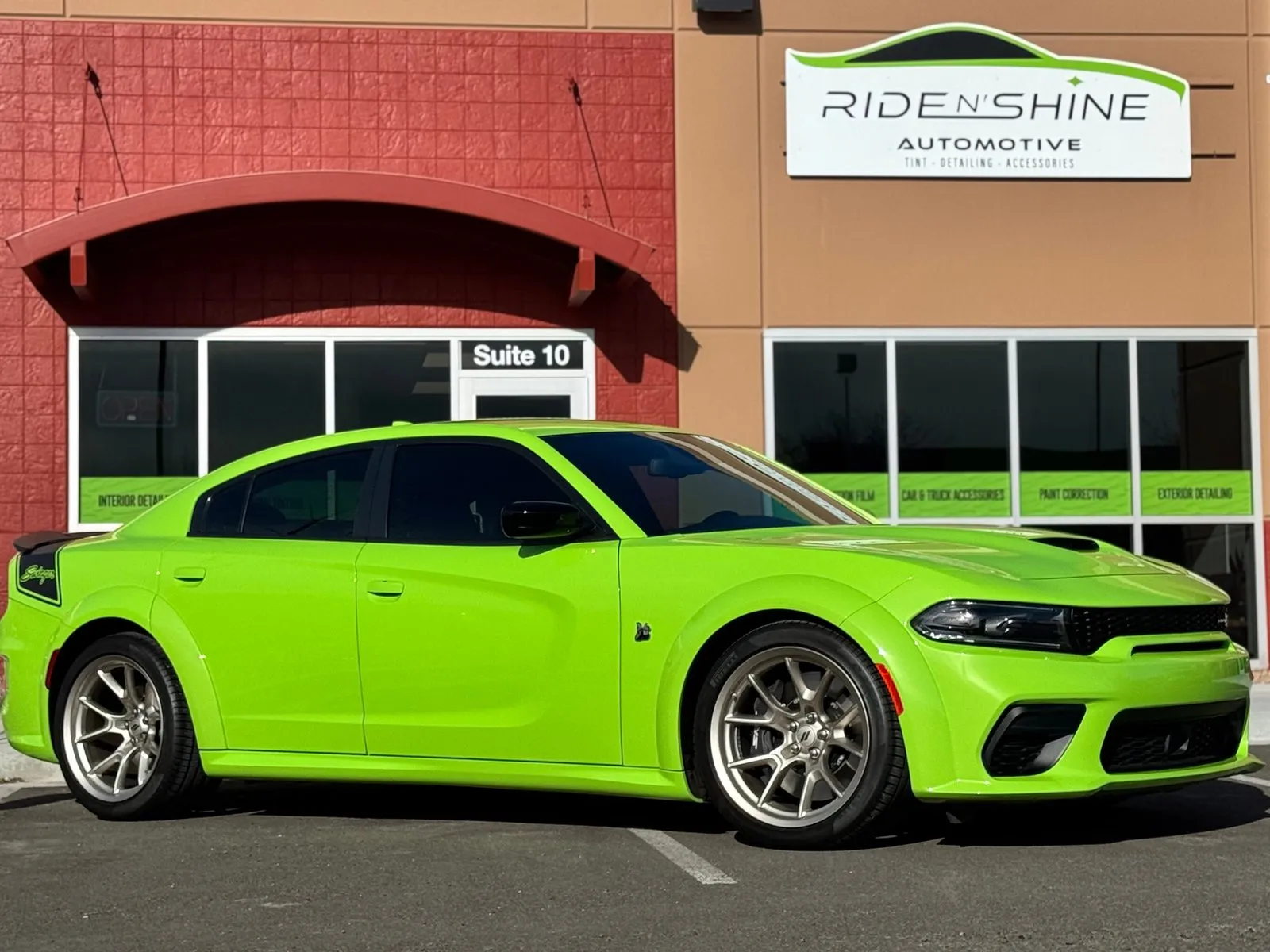
A bright green Dodge Charger came into our Arvada shop for the full protection stack: film on the panels that take the hits, and an Owner’s Pride Dual Layer 9-Year Self-Healing Ceramic Coating over the whole car. This is the pairing we recommend most for Colorado driving. Highway gravel chips front-end paint, sun and road chemicals dull the rest, and no single product handles both problems.
Why the panels were split
Paint protection film, the clear bra, is a nearly invisible urethane film. It is a physical barrier. A rock that would chip bare paint hits the film instead, and light scuffs in the film heal with warmth from the sun or warm water. Debris reaches some panels far more than others, so on this car the film went where the hits land: the hood, fenders, bumpers, and mirrors.
A ceramic coating solves a different problem. It bonds to the paint and cures into a hard, hydrophobic layer. Water and road grime slide off instead of sticking, and the surface resists UV, bird droppings, tree sap, and minor chemical stains. A coating will not stop a rock; that is the film’s job. What it changes is upkeep. Wash time drops by half, the waxing cycle goes away, and the gloss holds for years instead of months.
Splitting the panels this way puts the money where each product earns it. Film goes on the impact zones because that is where impacts happen. Coating goes everywhere because every panel gets dirty.
The work, in order
The order matters because a coating seals in whatever sits beneath it. We corrected the paint first, removing swirls and marring, so the finish under everything was clean and true. Then we applied the film to the impact zones, hand-fitting each panel to the Charger’s body lines. The 9-year coating went on last, over paint and film alike, so every surface on the car sheds water and grime the same way.
The dual-layer coating has self-healing of its own. Minor swirls and micro-scratches fade with heat or sunlight, the same way the film relaxes out light scuffs. Between the two layers, the small damage a daily driver picks up works itself out in the sun instead of stacking up until the next polish.
How it left the shop
The Charger drove out with a front end that absorbs rock chips instead of collecting them, and a finish that needs a gentle hand wash rather than a wax schedule. The green reads deeper under the coating because gloss is what a cured ceramic layer does best. The coating carries a 9-year warranty, registered with the manufacturer at handoff.