A truck bed cap (also sold as a camper shell or topper) turns an open bed into lockable, weather-sealed cargo space the full height of your cab. Choose a cap if you haul gear that has to stay dry and out of sight, or a dog that rides in back. Choose a tonneau cover if your loads sit below the bed rails and you want to keep the truck’s low profile.
What a cap gets you that a tonneau cover can’t
A tonneau cover is a lid. It closes the bed at rail height, keeps rain off whatever sits below the rails, and leaves the truck looking and driving much the way it did before. A cap is a room. It walls the bed to roof height, seals it against weather and road spray, and locks along with the rest of the vehicle.
That difference in shape settles most of the decision. Under a tonneau, a mountain bike lies on its side with the front wheel off. Under a cap, it can stand upright. A tonneau keeps a dog dry only if the dog is short and patient; a cap gives the dog headroom and shade, with airflow through opening side windows. Contractors who run tonneau covers stack tools flat and dig for them. Contractors who run caps build shelves.
One note on names before we go further. Topper, camper shell, canopy, and bed cap all mean the same product, and the label mostly depends on which state you learned to drive in. If you searched “Ford F-150 topper,” this guide is about the thing you meant. Tonneau covers are the separate, lower category, and we install both as part of our truck accessories work.
Aluminum or fiberglass, windows or work panels
Caps split along two lines: what they are made of, and what fills the sides.
Aluminum caps are the lighter and cheaper build. A dent in one stays a dent instead of spreading into a crack, and the usual matte or textured finish hides scratches, which is why fleets and tradespeople default to aluminum. Fiberglass caps weigh more and cost more, but the shell can be molded to follow the truck’s body lines and painted to your factory color code, so from across a parking lot the cap reads as part of the truck rather than a box bolted onto it.
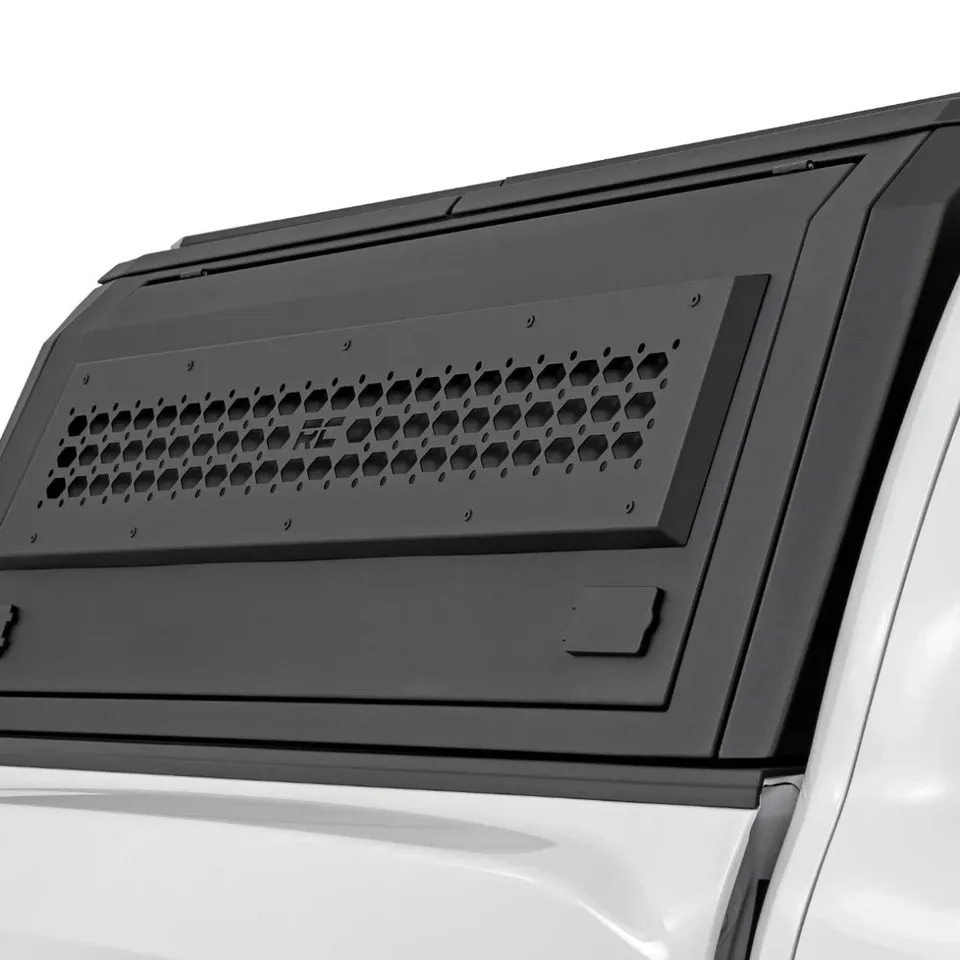
The second split is glass versus panels. Windowed caps carry side glass and a glazed rear door, which keeps your mirrors useful and the interior bright. Work-style caps trade the glass for solid or vented metal panels, often with locking side access doors. If the cap is for a dog, ski gear, or camping, you want glass that opens and screens that keep bugs out. If it is for tools, you want panels you can lock and stop thinking about.
What to check before you buy
Four things separate a cap you keep for ten years from one you sell in one.
Seal quality comes first. The cap sits on the bed rails against a foam gasket, and the rear door closes against the tailgate. A poor gasket lets dust in on washboard roads and fine snow in a ground blizzard, and you will not find out until your gear is gritty or wet. Ask to see the gasket, and ask how the rear door latches down against the tailgate gap.
Window hardware comes second. Check whether the side glass opens, whether screens come with it, and whether the rear door struts still lift the door in cold weather. Cheap struts sag at winter temperatures, and a rear door you have to hold up with your head gets old by November.
The roof load rating is the spec most buyers skip. If you ever plan a rack, a cargo box, or a rooftop tent, you need two numbers from the manufacturer: the dynamic rating, which is what the roof carries while the truck is moving, and the static rating, which is what it holds parked. The static number is the one that matters when two adults and a tent are on top of the cap at a campsite. A cap with no published ratings is a cap you should not load.
Paint match comes last. A color-matched fiberglass cap is sprayed to your truck’s paint code, and on a metallic or tri-coat color the match is worth seeing in person before you commit. Aluminum caps skip the question; their finish is meant to contrast, and it does.
The Rough Country cap on a Ford F-150
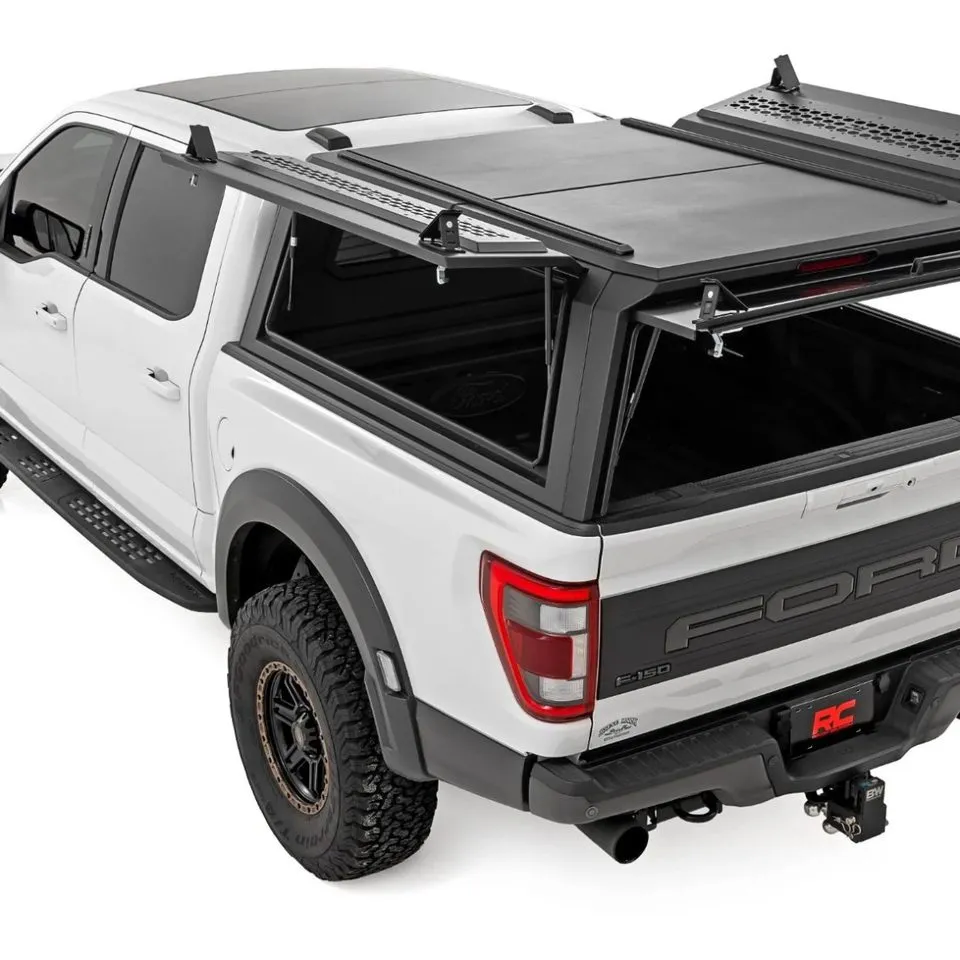
Here is how those criteria land on a specific product we install: the Rough Country bed cap for the Ford F-150. It is a work-style cap built on a stainless steel frame with a UV-resistant powder coat, and in place of fixed side glass it uses full-opening gullwing doors on both sides plus the rear. You reach your gear from outside the truck instead of crawling in over the tailgate, which matters more the more often you load and unload.
Inside, Molle panels line the walls, and Rough Country offers interior shelves and a driver-side storage box as add-ons, so the cap can be set up as a rolling tool room. An LED strip lights the interior for loading after dark, the panels lock, and an integrated third brake light keeps the truck visible from behind with the cap on. Heavy-duty seals keep the cargo area dry and dust-free. For roof loads, Rough Country publishes both numbers: 750 pounds static and 400 pounds dynamic, which covers a rack and a rooftop tent with people in it while parked.
The honest limits: this cap fits only the F-150 with the 5’7“ bed, so longer beds need a different shell. It also blocks cab-mounted cargo cameras and digital rear-view cameras, so if your F-150 has either, plan on losing that view with the cap installed.
What Colorado owners actually do with them
Ski season is the obvious case. Boots, bags, and wet layers ride locked in the back instead of steaming up the cab, and the bed stays secure while you stop for dinner on the way down I-70.
Trailhead dogs are the second. A windowed cap with screens gives a dog shade and moving air while you dig out the leash, and a locked door between your dog and a busy parking lot.
Work trucks get the least glamorous and most valuable version: tools and materials that stay dry through an afternoon snow squall on a job site in Arvada, with no tarp to fight and nothing walking off while you are inside.
The fourth case has grown every year we have watched it: sleeping platforms. A plywood platform under a full-height cap, with gear drawers below and a pad on top, is the simplest hard-sided camping setup a half-ton truck can carry, and the cap’s static roof rating decides whether a tent can go on top for a second sleeping spot.
Fit and installation reality
Caps are sold by bed, not by badge. Bed lengths differ within a single model line, and bed shapes change between truck generations, so a cap that sealed on one generation of F-150 will not seal on the next. Measure the inside of the bed from bulkhead to tailgate before you shop, and bring the year, make, model, and bed length to any quote.
Installation is less invasive than most owners expect. Nearly all caps clamp to the underside of the bed rails from inside the bed, with no drilling on most trucks. The work is in the details: setting the gasket so the seal is even, aligning the cap square to the tailgate, and wiring the third brake light and any interior lighting into the truck. A color-matched fiberglass cap adds lead time, since the shell is ordered and painted to your code before it ever reaches the shop.
One related question we get: headache racks. A headache rack earns its place on an open bed or under a tonneau, where a shifting load can reach the rear window. A cap’s front panel already stands between cargo and glass, so the two rarely belong on the same truck. If you regularly haul ladders or lumber past the cab line, that is rack-and-open-bed territory, and a cap would be the wrong purchase.
Cap or tonneau: how to decide
The test is what the bed carries in a normal month. If your loads sit below the rails and you value the clean profile, the tonneau wins: it costs less, keeps more of your fuel economy, and folds or rolls out of the way when a dishwasher needs to go home from the store. If the bed carries gear that must stay dry and locked, a dog, or a sleeping platform, the cap wins, and no tonneau closes that gap.
Two practical checks before you commit to a cap. Measure your garage door, because a cap adds height and a rooftop tent adds more. And decide who will help you take it off, because removal is a two-person lift and most owners leave the cap on year-round once it is up.
If you want to see both on your truck before deciding, start with a quote through our truck accessories page with your year, make, model, and bed length, and we will tell you what fits.